
Recent articles
Schools need a different floor in almost every room, and the right choice comes down to how each space gets used. Carpet tile is the workhorse in classrooms and libraries because it absorbs sound and lets you pull one damaged tile instead of replacing a whole floor. Cafeterias, corridors, and multipurpose rooms do best with luxury vinyl tile or commercial sheet vinyl, which clean fast and take chair scuffs. Commercial kitchens need quarry or porcelain tile with a coved base, because grease, hot water, and slip resistance are code issues, not preferences. Countertops follow the same logic: quartz and granite hold up in offices, breakrooms, and restrooms where laminate gets destroyed inside a few years.
What flooring works best in school classrooms?
Carpet tile is the most common classroom floor, with luxury vinyl plank as the second choice. Carpet tile does two jobs at once in a room full of talking: it drops the noise level and it makes the floor comfortable for kids who spend part of the day sitting on it. The replaceable-tile part matters more in a school than anywhere else. One spilled paint jar or one chair leg gouge means you swap a single 24 inch tile out of the custodial closet stock instead of scheduling a re-floor.
Where a district wants a hard surface, LVP and LVT hold up well to rolling chairs and daily mopping, and they read as newer than the VCT they are usually replacing. Kindergarten and early elementary rooms often mix the two, with carpet tile in the reading corner and vinyl in the wet or craft area. See our carpet options and our luxury vinyl page.
What flooring is best for a school library?
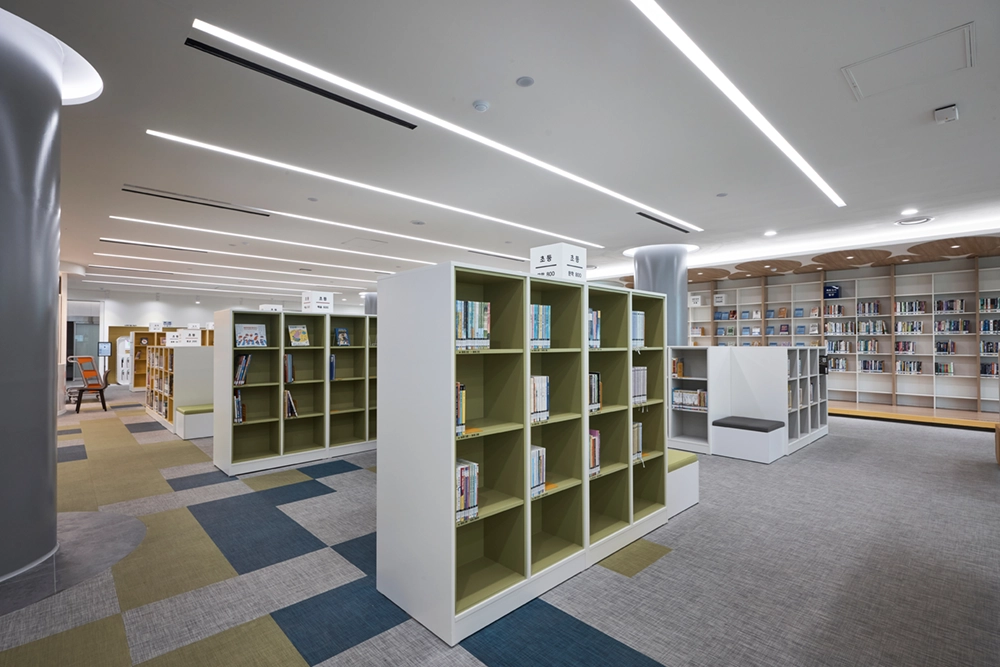
Libraries almost always get carpet tile or broadloom carpet, because quiet is the whole point of the room. Soft flooring absorbs footsteps and chair movement in a way hard surfaces cannot, and it keeps a large open room from echoing. Carpet tile is usually the better pick over broadloom in a library for one practical reason: book carts and shelving get moved, and the tiles under the heaviest traffic lanes can be replaced on their own.
Watch the pile height. A low, dense commercial loop pile rolls carts easily and vacuums clean. A plush or high pile fights the cart wheels and traps more dirt in a room where kids sit on the floor. Many libraries also run a border or a color-blocked pattern to mark reading zones, which is a design choice carpet tile handles well at no extra material cost.
What flooring holds up in cafeterias and corridors?
Cafeterias and corridors need a hard surface that cleans fast, which usually means luxury vinyl tile, commercial sheet vinyl, or VCT. These are the highest-traffic floors in the building and they take food spills, tracked-in mud, and hundreds of chairs dragging across them every day. Sheet vinyl has the advantage of fewer seams for dirt to collect in, and commercial lines from Tarkett and Polyflor are built for exactly this kind of use.
VCT is still everywhere in schools because it is inexpensive up front. Be honest about the tradeoff: VCT needs stripping and waxing on a schedule, and that custodial labor adds up over the life of the floor. LVT costs more to install and less to maintain. Districts weighing a long replacement cycle usually come out ahead with LVT. Compare our sheet vinyl and VCT options.
Do not put carpet in a cafeteria. It is the single most common flooring mistake we see in school buildings, and it never survives.
What flooring do school kitchens require?
Commercial kitchens need quarry tile or heavy-duty porcelain tile set with epoxy grout and a coved base up the wall. A school kitchen is a wet, greasy, high-heat environment with health inspections attached, so the floor has to resist grease, take boiling water without cracking, and hold slip resistance when it is wet. Quarry tile has been the standard for decades because it does all three and lasts.
The coved base is the part people skip and then regret. Running the tile up the wall in a curve instead of stopping at a floor-to-wall joint removes the seam where water and grease collect, which is what inspectors look for. Some districts spec a fluid-applied urethane system instead, which also works well. If your specification calls for one, bring it to the measurement and we will price it out.
What about gyms, restrooms, and science labs?
Each of these has its own answer, and none of them takes a general-purpose floor.
- Restrooms and locker rooms: porcelain tile with a coved base and slip-resistant finish. Water and cleaning chemicals rule out most other surfaces.
- Science labs: welded commercial sheet vinyl, because chemical spills need a continuous surface with no seams to soak through.
- Art rooms: sheet vinyl or LVT. Paint, clay, and glaze come off a hard surface and stay in carpet forever.
- Gyms and multipurpose rooms: these are usually a specialty athletic system rather than a standard commercial floor. We can handle the adjoining corridors, lobbies, and locker areas.
- Front offices and administration: carpet tile or LVT, the same as a professional office.
For a broader breakdown of how different building types choose, read our guide to the best commercial flooring by industry.
What countertops do schools use?
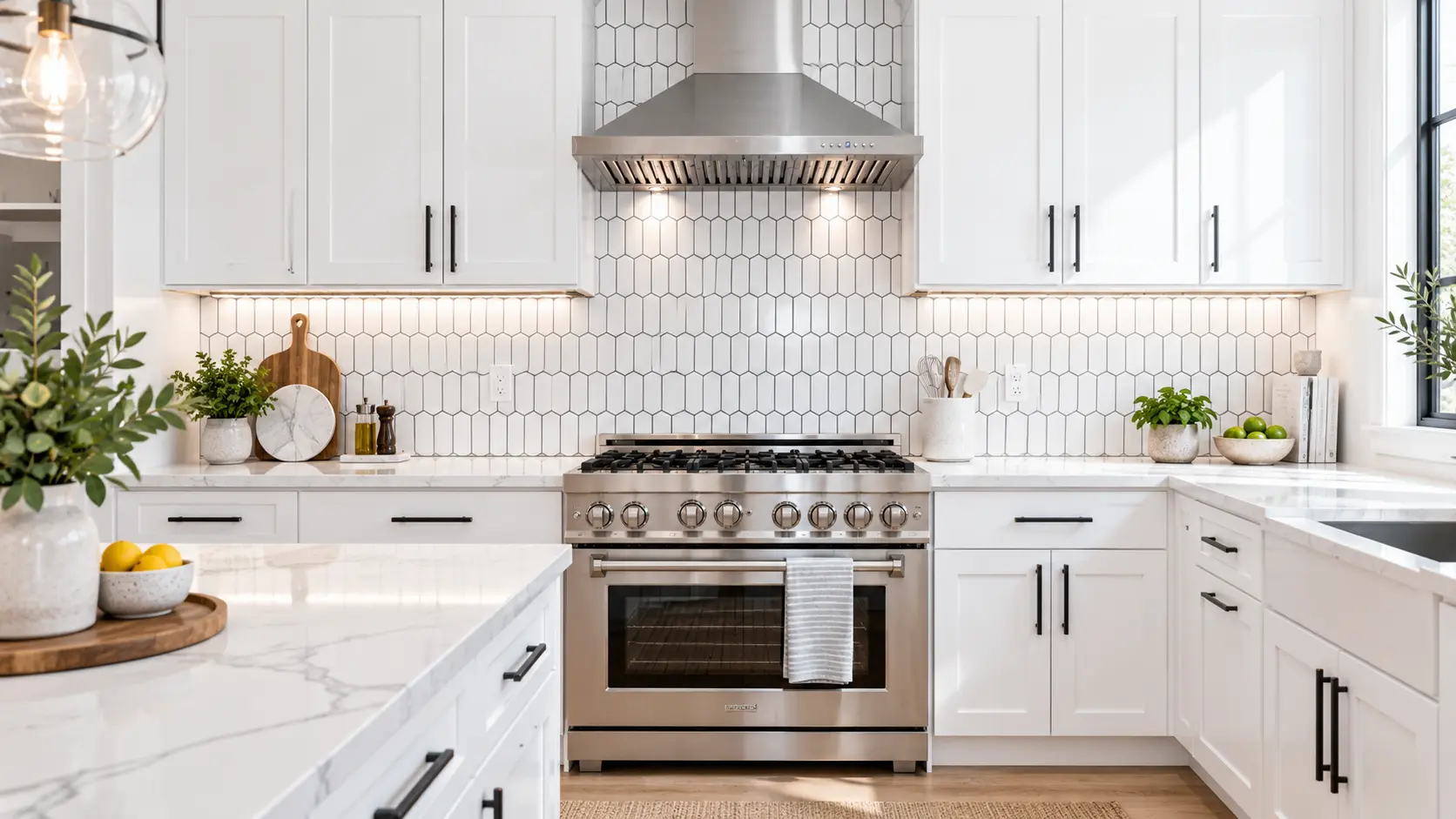
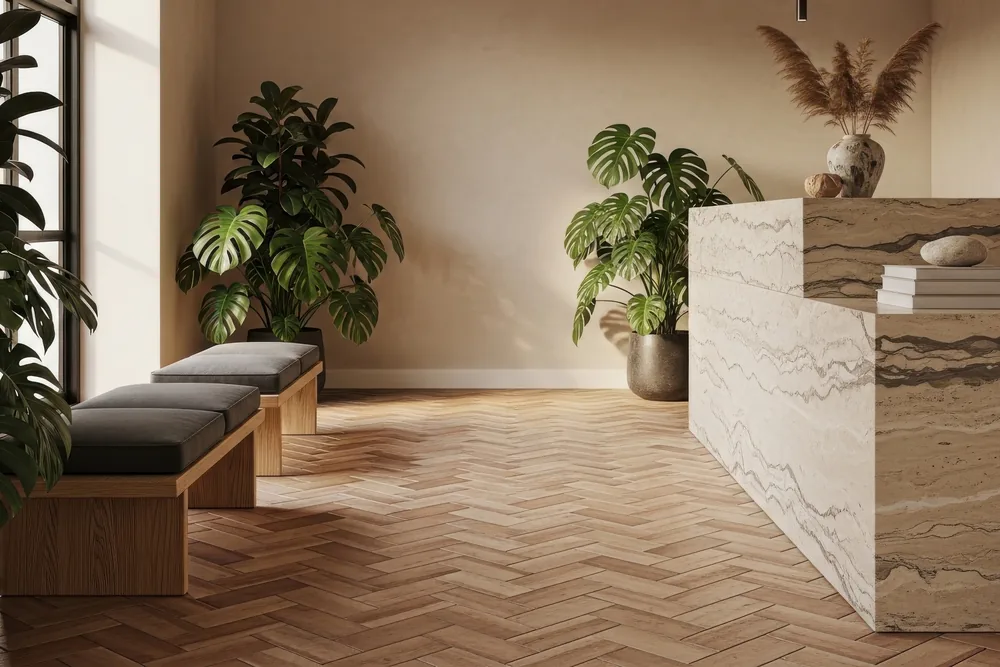
Schools use more countertop surface than most people expect, and the material should change by room. Quartz and granite handle the high-abuse public areas, while specialty surfaces belong in labs. We fabricate granite, quartz, and marble in our own shop, so pieces are cut for your building instead of ordered as stock sizes, and the counters and the floors go in on one schedule.
Restroom vanities
Quartz is the strongest choice for a school restroom vanity. It is non-porous, so it does not absorb water or soap residue, it stands up to daily disinfecting, and it does not delaminate the way a laminate top does once water gets into a seam. In a building where a vanity gets leaned on, sat on, and cleaned three times a day, that difference shows up in year two.
Staff breakrooms and teacher workrooms
Granite or quartz, and this is usually the easiest upgrade to justify. Breakroom counters take hot pans, coffee spills, and constant use, and they are also one of the few spaces in a building that exists for staff. A stone top lasts through the life of the room.
Front office and reception counters
Quartz or granite on the transaction counter, where every parent, delivery driver, and visitor puts their hands and their paperwork. This is the first surface anyone touches in your building, and a chipped laminate edge at the front desk says something about the building before anyone speaks.
Science lab tops
Chemistry labs use epoxy resin tops, which are a specialty product built for acid and solvent resistance. That is a different material from the granite, quartz, and marble we fabricate. If your project covers both, we can handle the flooring and the stone elsewhere in the building while the lab tops come from a lab casework supplier.
See our granite and quartz countertop options for colors and edge profiles.
How does the free measurement and quote work?
We come to your building, measure every room in the scope, check the subfloor, and send back a written quote with no pressure attached. Here is the sequence:
- Call or stop in to schedule. Call (509) 823-1060 or visit the showroom at 713 South 1st Street in Yakima. Tell us which buildings and rooms are in scope.
- We measure on site. We take real measurements room by room rather than working from a drawing, because a building that has been added onto over forty years rarely matches its plans.
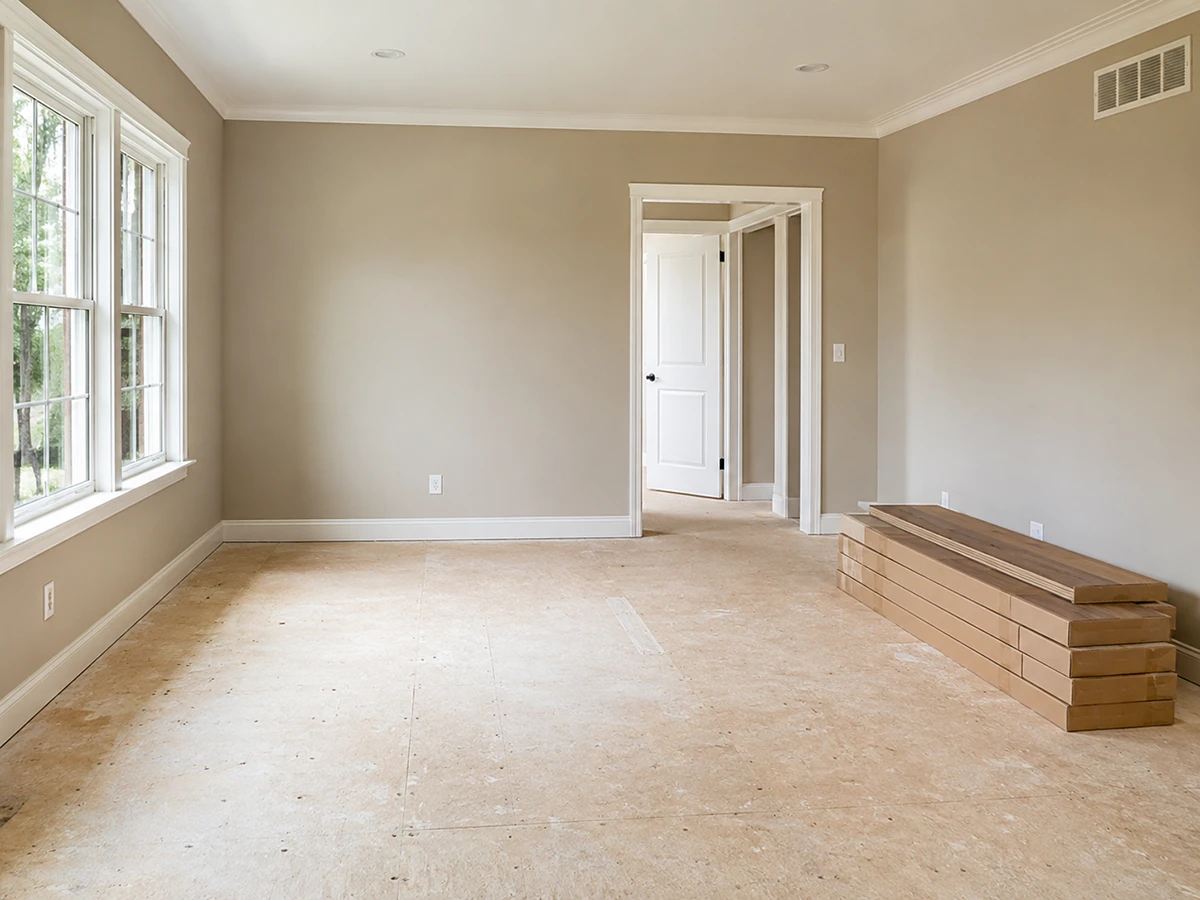
- We check the subfloor. This is the step that protects your budget. We identify what prep the slab or subfloor needs and write it into the quote up front, so a surprise does not appear halfway through the job.
- You get a written quote. Materials, subfloor prep, tear-out and haul-away of the old floor, installation, trim and transitions. All of it in writing, itemized, in a form you can take to a purchasing office or a board meeting.
- You decide on your timeline. No pressure and no expiring offer. Big job or one classroom, the measurement and quote are free either way.
Scheduling around a school calendar is its own problem, and it is one reason our in-house crews matter. Every installer works directly for our store, so we can commit to a summer break window, an evening, or a weekend and actually hold it. There is no subcontractor schedule sitting between your building and the work.
The honest part: where schools waste money on flooring
Three things cost districts more than the flooring itself. The first is buying on material price alone and ignoring maintenance cost, which is how buildings end up with acres of VCT and a custodial crew that spends its summer stripping and waxing. The second is putting a residential-grade product into a commercial building because the price per square foot looked good. It will not survive a school year of traffic, and the warranty will not cover a commercial installation.
The third is skipping subfloor prep to hit a number. A new floor over an uneven or damp slab telegraphs every flaw underneath and can fail at the adhesive. We would rather identify that at the measurement and put it in the quote than have you find it in year two. Our crews have installed carpet, tile, and luxury vinyl plank in schools, churches, movie theaters, and Job Corps around the Yakima Valley, and the jobs that go wrong are almost always the ones where prep got cut.
Schedule a measurement for your school
We handle commercial flooring and countertops for schools and districts across Yakima, Selah, Union Gap, Ellensburg, Toppenish, Sunnyside, and Grandview. Glenn, one of our owners, knows the commercial side and can walk a building with you. If it goes on the floor, we either have it in stock or we can get it, and the discount is in the price, not the quality.
Call (509) 823-1060 or schedule a free measurement. You can also see our full commercial flooring page, browse the Yakima Valley communities we serve, or read our commercial flooring guide for Yakima businesses.
Frequently asked questions
What is the best flooring for a classroom?
Carpet tile, in most cases. It lowers the noise level in a full room, it is comfortable for floor seating, and a damaged tile can be replaced individually instead of re-flooring the room. Luxury vinyl plank is the better choice where a district wants a hard surface.
Why do schools use carpet tile instead of broadloom carpet?
Replaceability. A single stained or torn carpet tile comes up and a spare goes down in minutes, which keeps a small accident from turning into a capital expense. Broadloom still makes sense in a library or auditorium where the look of a continuous floor matters.
What flooring meets health code in a school kitchen?
Quarry tile or heavy-duty porcelain tile, set with epoxy grout and finished with a coved base running up the wall. That combination resists grease and hot water, keeps slip resistance when wet, and removes the floor-to-wall seam inspectors flag.
What countertop material holds up best in school restrooms?
Quartz. It is non-porous, so it does not absorb water or soap, and it takes daily disinfecting without breaking down. Laminate vanities in high-use restrooms tend to swell and delaminate at the seams within a few years.
Can flooring be installed while school is in session?
Yes, in phases. Because our installers are employees rather than subcontractors, we can schedule evenings, weekends, or a summer break window and hold to it. Most districts do wings or buildings in stages so occupied classrooms stay usable.
Is the measurement really free for a commercial job?
Yes. The measurement and written quote are free for any flooring or countertop job, one classroom or an entire campus, with no obligation to book. Call (509) 823-1060 to set it up.
.webp)